
Litany of the Saints PDF: A Comprehensive Guide
Exploring digital resources for the Litany of the Saints in PDF format offers convenient access to this cherished Catholic devotion for personal and communal prayer.
Numerous websites provide downloadable PDFs, ranging from official Church sources to independent collections, facilitating widespread participation in this ancient practice.
What is a Litany of the Saints?
A Litany of the Saints is a solemn and ancient prayer within the Catholic Church, characterized by a rhythmic call-and-response structure. It’s a powerful invocation, beseeching the intercession of numerous saints in Heaven. The prayer traditionally begins with invocations to God – the Trinity – followed by a lengthy list of saints, apostles, martyrs, confessors, and virgins.
Each invocation typically follows the pattern: “Saint [Name], pray for us.” The congregation or those praying respond with “Pray for us.” This repetitive, yet deeply moving, format creates a sense of communal supplication and spiritual unity.
Historically, litanies weren’t solely focused on saints; early forms included petitions for various needs. However, the Litany of the Saints as we know it today evolved over centuries, becoming a specific prayer dedicated to seeking the aid of those already in God’s grace. Finding a Litany of the Saints PDF allows easy access to this beautiful and impactful prayer for personal devotion or group worship.
Historical Origins and Development
The roots of litanies stretch back to the early Church, evolving from ancient Jewish and pagan practices of invoking divine aid through repetitive petitions. Early Christian litanies, predating the specific Litany of the Saints, focused primarily on God’s attributes and pleas for mercy.
The formalized Litany of the Saints began to take shape around the 6th century, particularly within the monastic traditions. Saint Gregory the Great is often credited with significant contributions to its development, shaping the structure and content we recognize today.

Over the centuries, the litany underwent regional variations and additions, reflecting local saints and devotional preferences. The Roman Litany, a prominent form, became standardized for use in the Western Church. Accessing a Litany of the Saints PDF today allows one to experience a prayer form refined through centuries of faith and devotion, connecting believers to a rich spiritual heritage.
Theological Significance of Invoking Saints
Invoking the saints within the Litany of the Saints isn’t worship, but rather a request for intercession. Catholic theology understands the “Communion of Saints” as a spiritual solidarity uniting the faithful on earth, in Purgatory, and in Heaven.
Saints, having lived lives of heroic virtue and now enjoying God’s presence, are believed to be able to intercede on our behalf. Asking for their prayers is akin to asking a friend or family member to pray for us – it acknowledges their closeness to God and their compassionate concern for those still on earth.
A Litany of the Saints PDF provides a structured way to participate in this intercessory prayer, recognizing the saints as powerful witnesses to faith and models of Christian living. It affirms the belief that grace flows through the entire Body of Christ, strengthening our connection to God and one another.
Different Forms of the Litany
Litany variations exist, reflecting diverse liturgical traditions and devotional practices. While the core structure of call and response remains consistent, the specific saints invoked and the accompanying prayers can differ significantly. A Litany of the Saints PDF might showcase these variations.
Some litanies are broader, encompassing a wider range of saints, while others focus on specific patron saints relevant to particular needs or occasions. Regional differences also contribute to unique formulations, incorporating local saints and historical figures.
Beyond the traditional format, contemporary adaptations may include modern saints or emphasize themes like peace, justice, or environmental stewardship. Accessing a Litany of the Saints PDF collection reveals this rich tapestry of devotional expression, demonstrating the Litany’s enduring adaptability.
The Roman Litany
The Roman Litany, also known as the Litaniae Maiorum, represents a foundational form of the Litany of the Saints, deeply rooted in the liturgical traditions of the Catholic Church. A Litany of the Saints PDF often includes this historically significant version.
Originally sung or chanted during processions, particularly during Rogation Days, it implores God’s mercy and seeks the intercession of numerous saints. Its structure is characterized by a series of invocations, alternating between a leader and the congregation’s response, “Ora pro nobis” (Pray for us).
Finding a Litany of the Saints PDF featuring the Roman Litany allows access to a text that has shaped centuries of Catholic devotion. It serves as a powerful example of the Litany’s enduring relevance and its central role in communal prayer and supplication.
Litany of the Saints for Various Occasions

Litany of the Saints PDFs aren’t limited to a single, standardized form; many variations cater to specific needs and intentions. These adaptations demonstrate the Litany’s versatility as a devotional tool.
You can find PDFs tailored for occasions like healing, protection from harm, seeking guidance, or offering thanksgiving. These specialized litanies often include invocations of saints particularly associated with the specific intention – for example, Saint Raphael for healing or Saint Michael for protection.
Accessing a Litany of the Saints PDF allows users to select a version aligned with their current spiritual needs. This flexibility enhances the personal relevance and effectiveness of the prayer, fostering a deeper connection with the divine and the communion of saints.
Finding a Litany of the Saints PDF
Locating a Litany of the Saints PDF is readily achievable through various online platforms, offering convenient access to this traditional prayer for personal devotion and liturgical use.
Online Resources for PDF Downloads
A wealth of online resources provides access to Litany of the Saints PDFs, catering to diverse needs and preferences. Websites specializing in Catholic liturgical materials frequently host downloadable versions, often categorized by rite or occasion. Internet Archive and similar digital libraries can also yield historical editions and variations.
General search engines, using keywords like “Litany of the Saints PDF,” quickly reveal numerous options, though discernment is crucial. PDF search engines specifically index PDF documents, potentially streamlining the process. Many parishes and dioceses now offer liturgical resources, including the litany, on their websites for download.
Beware of unofficial sources; always prioritize PDFs from reputable Catholic organizations or publishers to ensure accuracy and fidelity to the traditional text. Exploring online forums dedicated to Catholic devotion may also uncover shared resources and recommendations from fellow believers. Remember to always scan downloaded files for viruses before opening them.
Official Catholic Websites Offering PDFs
Several official Catholic websites reliably offer Litany of the Saints PDFs, ensuring authenticity and adherence to approved liturgical texts. The United States Conference of Catholic Bishops (USCCB) website often provides liturgical resources, potentially including the litany, within its collection of prayers and ceremonies.
Diocesan websites frequently publish liturgical materials for local parishes, and many include downloadable PDFs of the Litany of the Saints for use during services or personal devotion. EWTN, a global Catholic media network, is a valuable resource, often providing downloadable prayers and liturgical aids.
Vatican.va, the official website of the Holy See, may host liturgical documents that contain the litany, though direct PDF downloads aren’t always available. Always prioritize these official sources to guarantee the accuracy and theological soundness of the text you are using for prayer and worship.
Third-Party Websites and Potential Risks
While numerous third-party websites offer Litany of the Saints PDFs, caution is paramount. These sources may contain inaccurate, altered, or incomplete versions of the litany, deviating from officially approved texts. Some websites might include extraneous content, such as advertisements or potentially harmful software, bundled with the PDF download.
Copyright infringement is another concern, as unauthorized distribution of copyrighted liturgical materials is illegal. Downloading from unverified sources risks supporting such practices. Furthermore, the theological accuracy of litanies found on unofficial sites cannot be guaranteed, potentially leading to misinterpretations or devotional errors.
Always exercise discernment when using third-party websites. Prioritize official Catholic sources whenever possible and carefully review any downloaded PDF for accuracy and integrity before using it for prayer or liturgical purposes. A healthy skepticism is crucial when navigating the digital landscape.
Ensuring Authenticity and Accuracy of PDFs
Verifying the authenticity of a Litany of the Saints PDF is crucial for faithful devotion. Compare the downloaded text with versions available on official Catholic websites, like those of dioceses or religious orders, to identify discrepancies. Look for the Nihil Obstat and Imprimatur – official endorsements signifying review and approval by Church authorities.
Pay close attention to the invocations; ensure they align with traditional formulations and do not contain alterations or additions. Check for proper formatting and the inclusion of all recognized saints. A reliable PDF will typically cite its source and publication details.
Cross-reference with printed liturgical books if possible. If inconsistencies are found, discard the PDF and seek a verified version. Prioritize PDFs originating from reputable sources to safeguard the integrity of this sacred prayer.
Copyright Considerations When Downloading
Respecting copyright when downloading a Litany of the Saints PDF is essential. While the prayers themselves are generally in the public domain, specific translations, arrangements, or accompanying materials may be protected. Always check for copyright notices or usage restrictions on the PDF document itself or the website offering it.
Avoid unauthorized reproduction or distribution of copyrighted PDFs. Sharing a PDF with others without permission from the copyright holder is a violation of intellectual property rights. If a PDF is offered for free download, ensure the website has the legal right to distribute it.
Consider supporting publishers who offer high-quality liturgical resources. Purchasing officially published PDFs helps ensure the continued availability of accurate and well-crafted materials for devotional use.

Understanding the Structure of the Litany
The Litany’s format features a call-and-response structure, invoking saints with petitions like “Saint Peter, pray for us,” fostering communal and personal devotion.
PDF versions maintain this traditional flow, aiding in recitation and deepening spiritual connection.
The Call and Response Format
The defining characteristic of the Litany of the Saints is its distinctive call-and-response structure, a deeply ingrained element preserved within the digital PDF versions readily available today. This format isn’t merely stylistic; it’s fundamentally theological, mirroring the communal aspect of prayer and the interconnectedness of the Church Militant, Suffering, and Triumphant.
Typically, a leader – often a priest or designated member of the congregation – proclaims the invocation, such as “Saint Michael, pray for us.” The congregation, or those joining in prayer using the PDF, respond in unison with “Pray for us.” This rhythmic exchange creates a powerful sense of unity and shared petition. PDFs often visually delineate these roles, making it easy for groups to participate effectively. The repetition reinforces the intercessory power of the saints and invites their spiritual assistance.
This interactive element distinguishes the Litany from other forms of prayer, fostering active engagement and a heightened sense of devotion; The PDF format allows individuals to practice and familiarize themselves with the responses, enhancing their participation when praying in a group setting.
Common Invocations and Their Meanings
Within the Litany of the Saints PDFs, certain invocations consistently appear, each carrying profound theological weight and historical significance. “Saint Michael, pray for us,” invokes the archangel as protector and defender against evil, a common theme throughout Christian tradition. “Saint Gabriel, pray for us,” recalls the angel of the Annunciation, representing divine communication and joyful tidings.
Invocations to Saint Joseph, the foster father of Jesus, emphasize his role as a just man and protector of the Holy Family. Prayers to the Blessed Virgin Mary, under titles like “Mother of God” and “Queen of Apostles,” highlight her unique intercessory power and maternal care. PDFs often include footnotes or accompanying explanations detailing the patronage and significance of each saint.
Understanding these meanings enriches the prayer experience, transforming the Litany from a recitation of names into a heartfelt plea for intercession from those already in God’s grace. The readily available PDF resources facilitate this deeper understanding.
The Role of the Priest or Leader
In Litany of the Saints services, as detailed in many PDF guides, the priest or designated leader assumes a crucial role in guiding the communal prayer. They initiate each invocation with the familiar “Kyrie eleison” (Lord, have mercy), and then proclaim the name of a saint or holy figure. This prompts the congregation’s responsive “Ora pro nobis” (Pray for us).
The leader’s clear enunciation and reverent tone are essential for maintaining the prayerful atmosphere. PDF versions of the Litany often include specific rubrics outlining the leader’s responsibilities, ensuring consistency across different celebrations. They also typically lead the concluding prayers, offering thanks and petitions to God through the intercession of the saints.
While the Litany can be recited privately using a PDF, the presence of a leader enhances its communal dimension, fostering a unified expression of faith and devotion. The PDF resources clarify the leader’s function.
Musical Settings and Chanting
Many Litany of the Saints PDF resources showcase that while traditionally recited, the Litany lends itself beautifully to musical settings and chanting. Gregorian chant is a common accompaniment, enhancing the solemnity and meditative quality of the prayer. PDFs often include musical notation for the responses and invocations, facilitating choral or congregational singing.

Simpler melodic settings are also available, making the Litany accessible to smaller communities or individual singers. These musical arrangements can vary in complexity, from straightforward call-and-response patterns to more elaborate polyphonic compositions. The choice of musical setting often depends on the liturgical context and the available resources.
Exploring PDF collections reveals diverse musical interpretations, demonstrating the Litany’s adaptability and enduring appeal. Chanting, in particular, emphasizes the rhythmic and prayerful nature of the invocations, deepening the spiritual experience.
Variations in Litany Length and Content
Examining Litany of the Saints PDF documents reveals significant variations in length and content. The traditional Roman Litany is quite extensive, invoking a vast number of saints. However, shorter versions exist, tailored for specific occasions or devotional needs. These abridged Litany PDFs often focus on patron saints relevant to the intention being prayed for.
Content variations also occur. Some PDFs include additional invocations for specific needs, like healing or protection, while others may emphasize saints particularly venerated in certain regions or religious orders. Modern adaptations, found in some PDF collections, might incorporate contemporary saints or blesseds.
PDFs demonstrate that the Litany isn’t rigidly fixed; it’s a flexible form allowing for customization. This adaptability ensures the prayer remains relevant and meaningful across diverse contexts and personal devotions.

Using the Litany of the Saints
Litany of the Saints PDFs facilitate both private devotion and public liturgical use, offering a powerful tool for intercession and spiritual enrichment.

These resources enable individuals and communities to readily access and participate in this ancient and meaningful prayer tradition.
Appropriate Times for Recitation
Utilizing a Litany of the Saints PDF allows for flexible integration into various moments of prayer and devotion. Traditionally, the Litany is often recited during solemn liturgical celebrations, particularly during processions, Rogation Days, and Ember Days, enhancing the communal aspect of supplication.
However, the accessibility of PDF versions expands its use beyond the liturgical calendar. Individuals can incorporate it into their daily personal prayer routines, offering petitions for specific needs like healing, protection, or guidance.
The Litany is particularly fitting during times of difficulty or crisis, serving as a powerful invocation of heavenly intercession. Many find solace in reciting it during Advent and Lent, seasons of penance and preparation. Furthermore, a PDF allows for convenient use during novenas or other dedicated prayer periods, fostering a deeper connection with the Communion of Saints and strengthening faith through collective supplication.
Its adaptable nature makes it a valuable resource for both individual and group spiritual practice.
Litany in Personal Prayer
Employing a Litany of the Saints PDF for personal devotion fosters a profound connection with the heavenly hosts. The readily available format allows for convenient, private recitation, transforming any space into a sanctuary of prayerful intercession.
Individuals can utilize the Litany to present specific intentions – seeking guidance, strength, or comfort – directly to God through the intercession of the saints. The rhythmic call-and-response structure encourages focused meditation and a contemplative state.
A PDF enables customization; one can easily highlight favorite invocations or add personal petitions. It’s particularly beneficial during quiet moments of reflection, offering a structured yet adaptable framework for heartfelt supplication.
The Litany’s power lies in its communal aspect, even when prayed individually, reminding the believer of their unity with the Church Militant, Suffering, and Triumphant, strengthening faith and offering solace in times of need.
Litany in Liturgical Celebrations
Utilizing a Litany of the Saints PDF within liturgical settings elevates the solemnity and spiritual depth of the service. Traditionally, the Litany accompanies processions, particularly on Rogation Days, imploring God’s blessing upon the land and its fruits.
The PDF format provides a standardized text for congregational participation, ensuring uniformity in the invocations and responses. It’s often employed during penitential seasons like Lent, fostering a spirit of repentance and seeking divine mercy.
A priest or designated leader guides the recitation, while the congregation responds, creating a powerful communal prayer experience. The Litany can also preface the blessing of holy water or other sacramental rites.
Its inclusion enhances the liturgical atmosphere, reminding worshippers of the intercession of the saints and their role in mediating God’s grace, strengthening the bonds of faith within the community.
Litany for Specific Intentions (Healing, Protection, etc.)
Employing a Litany of the Saints PDF allows for focused intercession tailored to specific needs, such as healing, protection, or guidance. Individuals and groups can adapt the standard form by adding petitions relevant to their particular concerns.
For instance, a litany for healing might include invocations to Saint Raphael the Archangel, known as the patron saint of healing, alongside general pleas for divine intervention. Similarly, a litany for protection could invoke Saint Michael, the protector against evil.
The PDF format facilitates easy customization, enabling users to insert specific names or situations into the petitions, personalizing the prayer experience. This focused approach intensifies the prayer’s power.
Utilizing this practice fosters a sense of hope and reliance on divine providence and the intercession of the saints, offering comfort and strength during challenging times, reinforcing faith and community support.
The Litany and Marian Devotion
A Litany of the Saints PDF often incorporates invocations to the Blessed Virgin Mary, highlighting her unique role in salvation history and her powerful intercession. Marian litanies, or sections within broader litanies, emphasize her titles – Mother of God, Queen of Heaven, Immaculate Conception – and beseech her aid.
These Marian invocations demonstrate the close connection between venerating the saints and honoring Mary, recognizing her as the Mother of all believers and a powerful advocate before God. The litany’s structure lends itself beautifully to praising Mary’s virtues and seeking her guidance.
PDF versions readily available allow for focused devotion, enabling individuals to easily access and recite Marian litanies as part of their personal prayer life or within larger liturgical celebrations.
This integration underscores the importance of Marian devotion within the broader context of Catholic spirituality, fostering a deeper relationship with Mary and through her, with Christ.
Beyond the PDF: Exploring Further

Delving deeper than a Litany of the Saints PDF reveals rich resources – books, online forums, and artistic expressions – enriching understanding and devotion.
These avenues foster a vibrant community and a broader appreciation for this timeless prayer tradition.
Books Containing the Litany of the Saints
Numerous liturgical books and devotional manuals traditionally include the Litany of the Saints, offering a tangible alternative to digital PDFs. These volumes often present the litany within the broader context of liturgical practices and spiritual reflection.
Classic Roman Catholic prayer books, such as the St. Joseph Prayer Book and the Magnificat Companion, frequently feature the litany alongside other traditional prayers and devotions. Examining older missalettes and breviaries can also reveal historical variations of the litany.
Furthermore, specialized books dedicated to the saints themselves often incorporate the litany as a means of honoring and invoking their intercession. Exploring theological works on the Communion of Saints may also provide insightful commentary on the litany’s significance. These printed resources offer a tactile and enduring connection to this cherished prayer form, free from the reliance on electronic devices or potential PDF accessibility issues.
Consider searching for compilations of traditional Catholic prayers, as these frequently include the Litany of the Saints alongside other beloved devotions.
Online Communities and Forums
Engaging with online communities and forums dedicated to Catholic faith and devotion can be a valuable resource for discovering and discussing the Litany of the Saints. These platforms often host shared PDFs, translations, and discussions about its proper use.
Websites like Reddit’s r/Catholicism and various Catholic discussion boards frequently feature threads where members share resources, including links to downloadable PDFs of the litany in different languages and formats. These forums also provide a space to ask questions and learn from others’ experiences.
Facebook groups focused on traditional Catholic practices or specific saints often share liturgical materials, including the litany. Be mindful of verifying the authenticity of any shared PDFs. Participating in these communities fosters a sense of shared faith and provides access to a wealth of knowledge regarding this powerful prayer.
Remember to exercise caution and discernment when downloading files from unfamiliar sources within these online spaces.
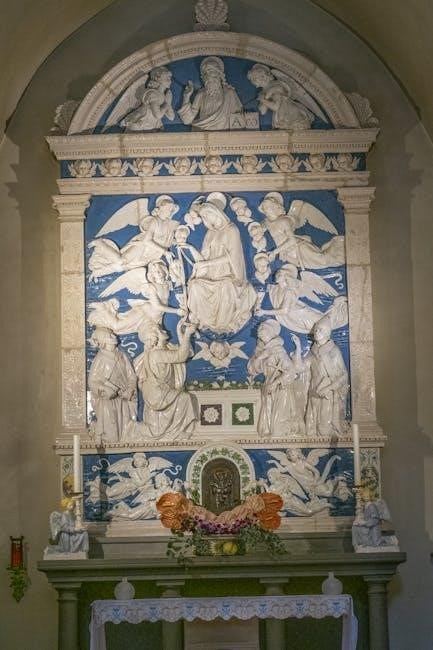
The Litany in Art and Music
Historically, the Litany of the Saints has profoundly inspired artistic and musical expression, reflecting its central role in Catholic liturgical life. While a direct correlation to PDF availability isn’t present, understanding this influence enriches appreciation.
Medieval and Renaissance illuminated manuscripts often featured visual representations of litanies, depicting processions of saints invoked within the prayer. Musical settings, ranging from simple Gregorian chants to elaborate polyphonic compositions, have been created throughout the centuries.
Composers like Tomás Luis de Victoria and Giovanni Pierluigi da Palestrina incorporated litany-like invocations into their sacred music. Modern composers continue to draw inspiration from the litany’s structure and themes.
Though not directly found within a PDF, exploring these artistic and musical interpretations provides a deeper understanding of the litany’s cultural and spiritual significance, complementing its textual form. Searching online music databases can reveal recordings of litany-inspired pieces.
The Connection to the Communion of Saints
The Litany of the Saints beautifully embodies the core Catholic doctrine of the Communion of Saints – the spiritual solidarity of all Christians, living and deceased. A PDF version facilitates access to this powerful prayer, reinforcing this connection.
By invoking a multitude of saints, the litany acknowledges their intercession and recognizes the ongoing relationship between those on earth, those in Purgatory, and those in Heaven. It’s a collective plea for assistance from the entire family of God.
Each saint represents a unique example of faith and virtue, inspiring believers to emulate their lives. The litany isn’t merely a list of names; it’s an affirmation of shared holiness and mutual support within the Church.
Downloading a PDF allows for frequent recitation, deepening one’s awareness of this mystical bond. It serves as a reminder that we are not alone in our spiritual journey, but surrounded by a cloud of witnesses praying for us.
Modern Adaptations and Contemporary Use
While rooted in tradition, the Litany of the Saints isn’t static. PDF versions allow for easy customization and adaptation to contemporary needs and devotional practices. Modern use extends beyond formal liturgical settings.
Some communities create litanies including saints particularly relevant to their local context or specific concerns, demonstrating the prayer’s flexibility. Digital PDFs facilitate sharing these adapted versions widely.
Contemporary applications include incorporating the litany into personal prayer routines, using it as a focus for meditative reflection, or employing it during times of crisis or communal need.
The accessibility of PDF formats encourages its use in small groups, online prayer communities, and even individual devotion. It remains a powerful tool for seeking intercession and deepening faith in the 21st century.